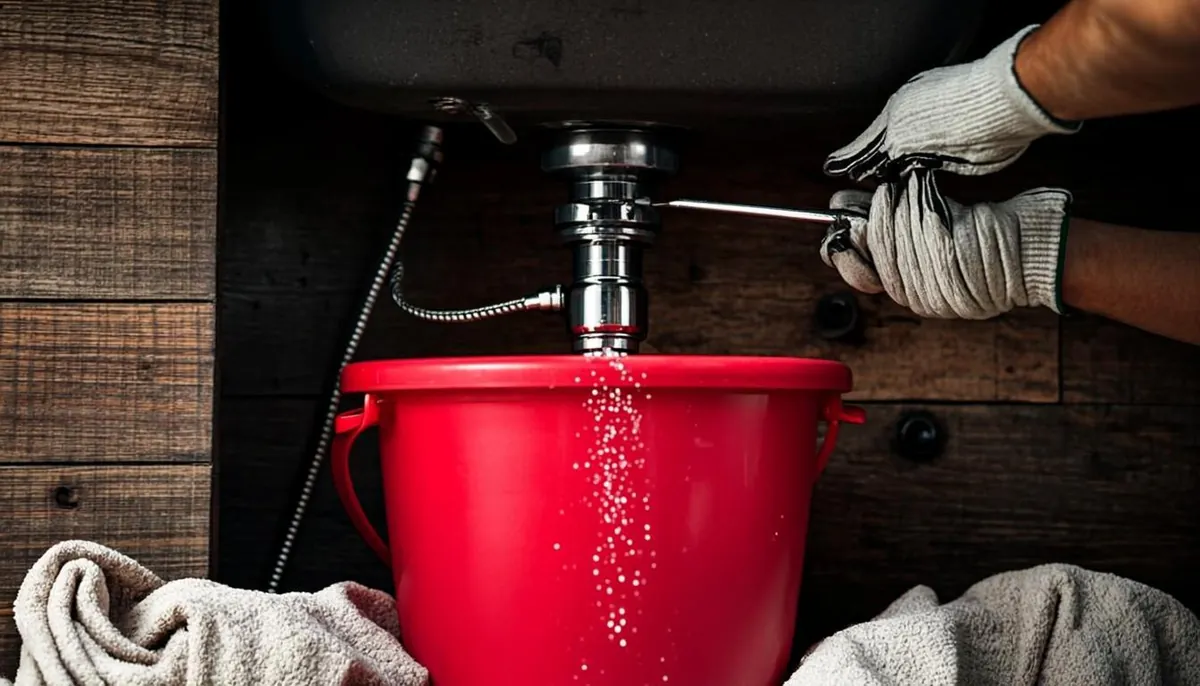
Ask our crews which single drain generates the most repeat calls across Linden's residential blocks and the answer is instant: the kitchen line. The pattern holds from Monmouth Heights to the neighborhoods around it, and nearly every one of those calls traces back to a short list of things that went down a disposal that was never designed to eat them.
The Never List
| Never put down | Why it clogs | Where it goes instead |
|---|---|---|
| Cooking fats, oils, grease (FOG) | Liquid when warm, solid past the trap; stacks in rings that narrow the line | Sealed container, trash once cooled |
| Coffee grounds | Settle and pack into sludge at every low spot | Compost or garden |
| Eggshells | Membrane wraps the grinder; shell grit packs with grease | Compost or trash |
| Starchy foods (rice, pasta, potato peels) | Swell into paste that binds debris | Trash; potatoes into compost |
| Fibrous produce (celery, corn husks) | Strings wrap the grinder and drag into the drain | Compost or trash |
| Expandable wipes and paper towels | Never break down; the main line's worst offender | Trash, always |
Why the Disposal Is Not the Problem
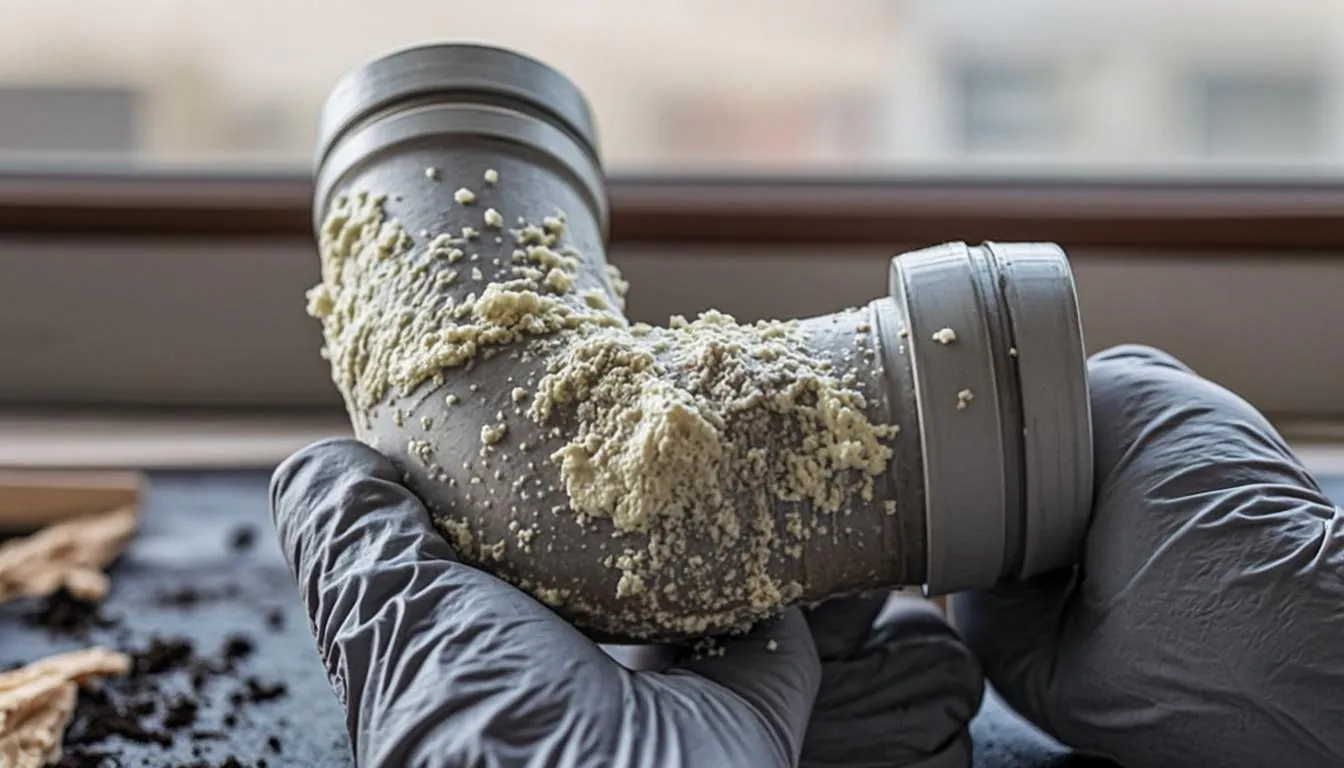
The disposal grinds; the pipe downstream decides what that grind becomes. Fats poured down hot with running water pass the trap as liquid, cool a few feet into the branch, and coat the wall; each subsequent meal adds a layer. The disposal gets blamed because it is where the food went in, but the crime scene is the pipe beyond it, which is why a brand-new disposal almost never fixes a slow kitchen sink.
The Monthly Routine That Works
- Cold-water habit: run cold water before, during and after disposal use; cold keeps fats solid so they travel as chunks instead of coating walls.
- Citrus and ice weekly: a tray of ice cubes and a lemon quarter scours the grinding chamber; it is maintenance for the disposal, not the pipe.
- A monthly hot-flush finish: a kettle of hot (not boiling) water with dish soap down an already free-flowing sink helps move soft grease; it does not rescue a clogged line.
- The strain rule: everything that is not liquid meets a strainer first. Cheap, boring, effective.
When the Line Is Already Slowing
A kitchen line that has slowed over weeks has a grease ring a routine will not dissolve, and that is mechanical territory: a scoped clearing or a jet of the branch restores full diameter in one visit. What the routine then does is stretch the interval to months instead of weeks. For heavy grease lines we jet rather than snake, because a scour actually removes the ring; the comparison is laid out in our jetting guide, and same-day fixture clearing runs through our residential service. Restaurant operators need a different calendar entirely, covered in our commercial programs.
One Call Gets a Truck Moving in Linden
Flat quote first, camera-verified work, and a dispatcher who answers at 3 a.m.: (908) 663-0076. The kitchen sink is filling faster every week? Same-day fixture clearing across Linden with flat quotes. Call now and keep the weekend plans.
Call 24/7: (908) 663-0076