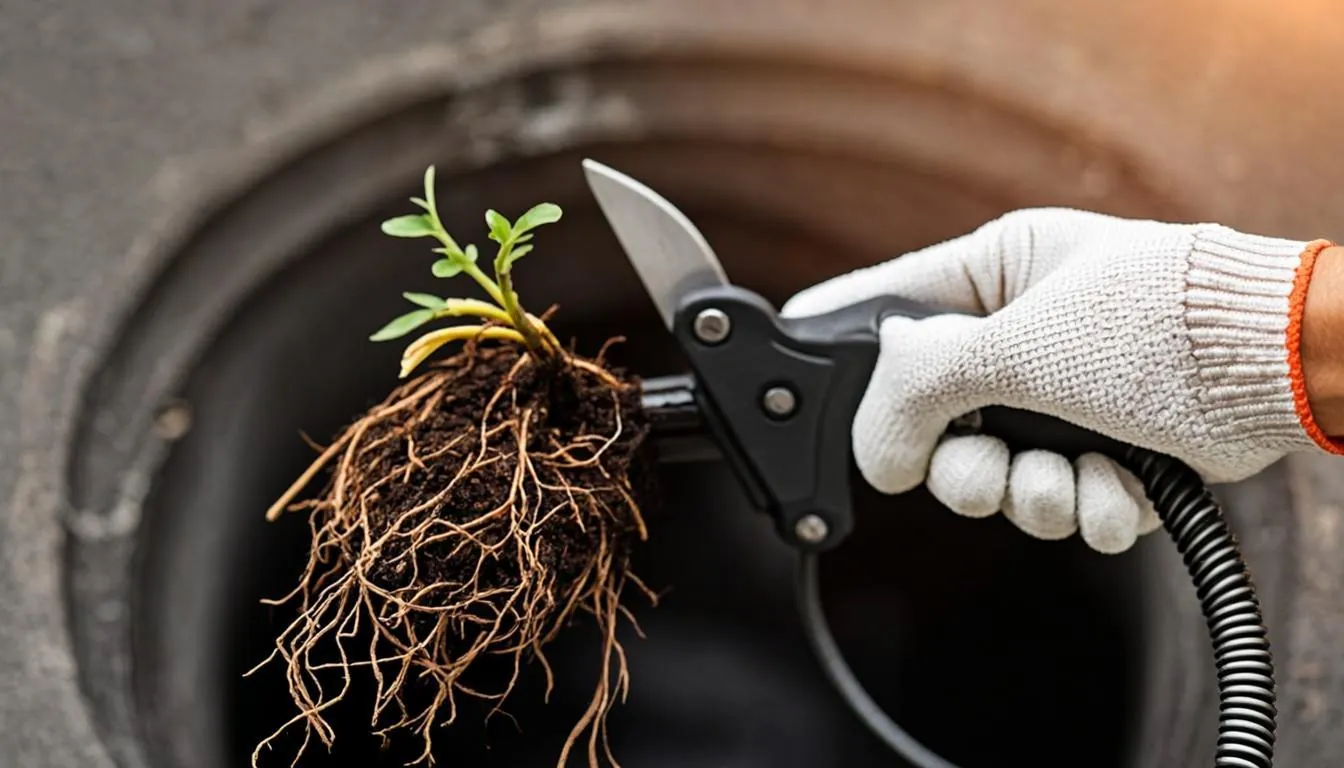
Every spring, drain cables across Linden pull up the same trophy: a twisted knot of pale root fibers, freshly sheared, smelling faintly of the oak it came from. Roots in sewer lines are the single most common main-line problem in older Union County towns, and understanding how they get in explains why simply cutting them out is only half the story.
Why Roots Target Sewer Lines
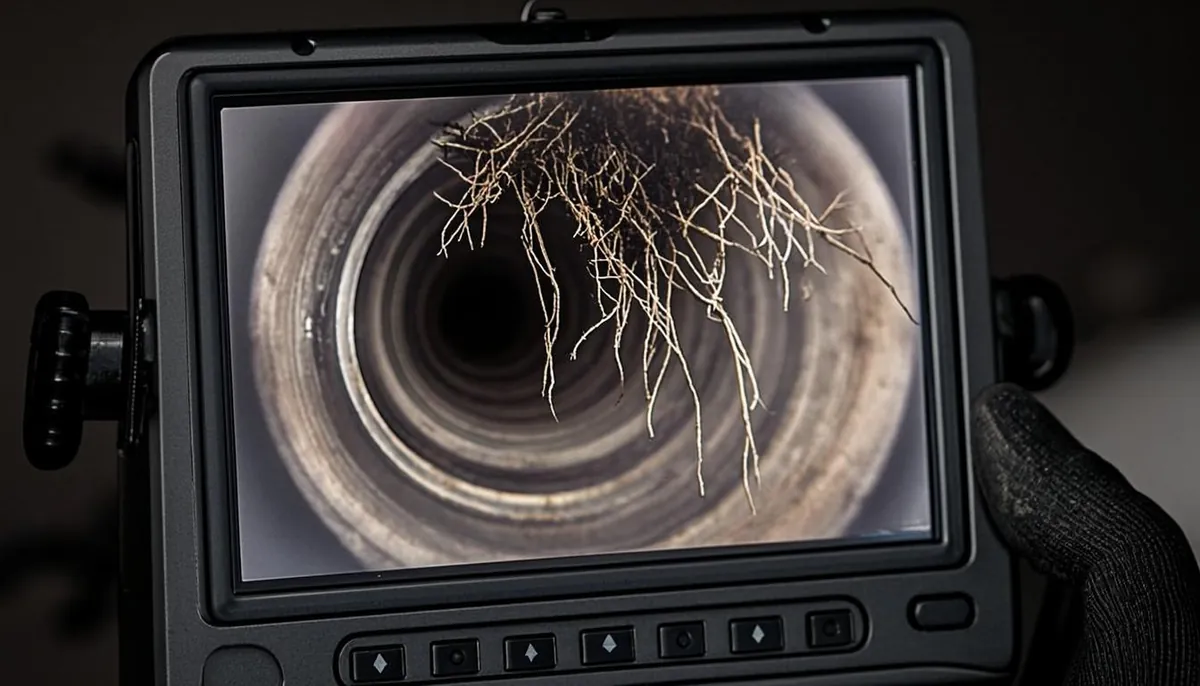
A tree root is a moisture-seeking system, and a buried sewer pipe is the wettest thing in the yard. Even a sound pipe loses humidity through its walls; an aging one offers far more. Fine root hairs patrol the soil outside the pipe, thicken toward the signal, and wrap the barrel in search of an entry. The joints are the weak point: older clay lines were laid in short sections with gasketed or mortared joints, and decades of soil movement open hairline gaps that a root hair exploits easily.
Once inside, the behavior changes. The protected, humid, nutrient-rich pipe interior lets the hair branch and thicken, and what began as a few threads becomes a mat that filters paper and grease into a plug. University extension guidance is blunt about the physics: roots exert enough pressure to rupture and displace buried lines over time, which is why an ignored root problem eventually becomes a broken-pipe problem. (See Rutgers' homeowner's manual for the source language.)
Why Linden Gets More Than Its Share
- Clay laterals from the 1950s boom: Linden's postwar housing wave went in on clay tile, whose joints are precisely the entry points roots probe.
- A mature canopy: streets shaded by decades-old oaks and maples carry root systems already spanning every front yard.
- Water-table push: low-lying sections near the waterfront and river edges keep soil moist, which keeps roots growing year-round.
Getting Them Out: Cutting, Jetting, Lining
| Method | What it does to roots | How long it lasts |
|---|---|---|
| Mechanical rooter cutting | Shears the mat and restores flow the same hour | Months to a season; the joint gap remains |
| Hydro jetting | Scrubs out hair and fragments the cutter left behind | Longer than cutting alone; wall rebuilt clean |
| Cured-in-place lining | Eliminates the joints roots use; seamless barrel inside the old pipe | Multi-decade answer to re-entry |
The sequence that works on a root-active clay line is cut, jet, then decide: mechanical cutting opens emergency flow, jetting clears the residue, and the camera footage tells you whether the joints deserve a liner before the next growing season. Skipping the last step is how the same line earns three service calls a year.
Prevention That Actually Helps
No gardener's trick stops roots from seeking water, but maintenance intervals do the practical work: a scoped, jetted line on a schedule matched to the tree pressure stays ahead of the mat instead of chasing it. When a line gets lined, the schedule resets entirely, because the seamless barrel leaves nothing to enter. Between services, keep grease and paper out of the line; roots colonize faster where debris already collects.
If the same line keeps growing roots, our main sewer line cleaning page covers the emergency half of the fix, and trenchless repair covers the permanent one. Both start with the same step: a camera inspection that shows exactly where the roots are entering.
Water Moving the Wrong Way? We Answer Around the Clock
Describe what you are seeing and a dispatcher confirms a flat price tonight: (908) 663-0076, answered every hour of the year. Roots in the line tonight? Our crews cut, jet and scope Linden laterals 24/7, and the camera shows you exactly where they are getting in.
Call 24/7: (908) 663-0076