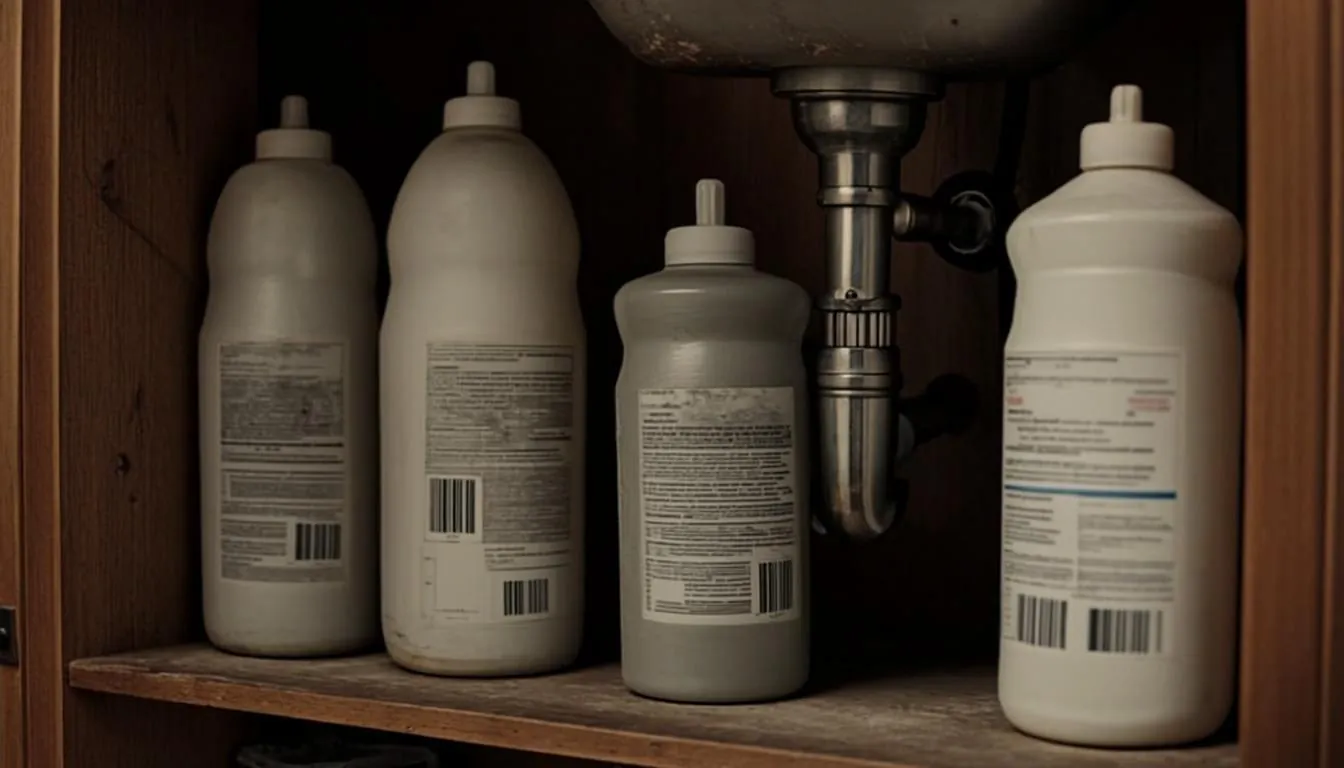
The bottle under the sink promises a five-minute fix, and sometimes it delivers one. What the label does not explain is what happens inside an aging pipe when a caustic chemical meets a clog it cannot dissolve, and why we routinely see the aftermath of that chemistry on camera in Union County basements.
What Chemical Openers Actually Do
Most drain openers rely on caustic chemistry: strong alkali (lye) or acid that generates heat as it reacts with organic matter. On a young PVC line with a hair clog near the trap, that reaction can work. On the lines that fill our Linden schedule, decades-old cast iron and galvanized drains, the story changes: the chemical pools on top of the clog, sits in one spot generating heat, and attacks the pipe wall or the soldered, threaded and galvanized connections around it rather than the stoppage below.
The failure pattern repeats across service calls: the chemical softens just enough of the clog to let water creep through, the homeowner believes the problem solved, and the remaining ring of grease keeps catching debris until the line re-clogs. Repeat applications stack heat on heat in the same section of pipe, and that is when older metal shows pitting, and PVC shows softened, deformed sections near the pooling point.
What Jetting Does Instead
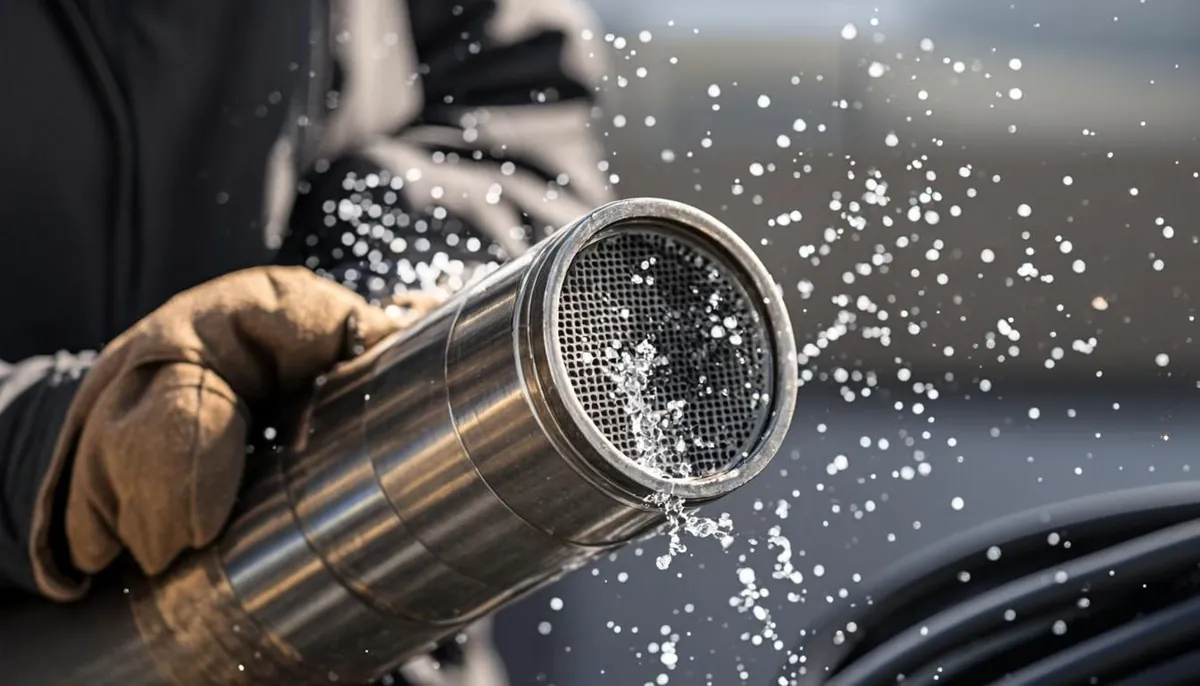
Hydro jetting attacks the same clog with water, scoured at pressures our 2026 fleet specs at up to 4,000 PSI. No heat, no chemistry, no reaction with the pipe wall: just mechanical force aimed backward along the line, stripping the grease ring and sludge off the wall and flushing it out of the pipe entirely. Because the method cleans rather than dissolves, the pipe wall it leaves behind is genuinely clean, which is why jetted lines stay clear so much longer than chemically punched ones.
The camera boundary matters here too: jetting is booked after a scope confirms the pipe can take the pressure, exactly because we would rather quote a repair on a broken pipe than blast it clean for its funeral. That sequencing is the professional answer to the question the bottle cannot ask.
When a Chemical Is and Is Not Reasonable
- Reasonable: a sound, modern PVC fixture line with a near-trap hair clog, used once, label followed, and flushed thoroughly.
- Not reasonable: any cast iron or galvanized line; any main branch clog; any line that has already had one chemical attempt; any standing-water kitchen line loaded with grease.
- Never: combining products, applying a plunger after chemicals (splash-back), or using openers as monthly maintenance.
A Safer Ladder to Climb First
- Plunge properly: a sink plunger on the fixture clears many near-trap clogs without chemistry.
- Pull the trap: a bucket, channel locks and ten minutes empty the trap where most kitchen clogs live.
- Hand auger: a small cable through the cleanout reaches further without heat or chemistry.
- Call for mechanical clearing: when water still stands, the clog is beyond the trap, and a scoped, sized clearing is the safe end of the story.
For the lines chemicals cannot fix safely, our hydro jetting page explains the scour process and pricing, and the residential crew handles the fixture-level work the same day. The kitchen-prevention version of this story lives in our guide to keeping sinks clear without chemicals.
The Longer a Clog Sits, the Bigger the Job
Stop the problem while it is still a service call. Local crews dispatch 24/7 from Linden: (908) 663-0076. Chemicals already in the line and water still standing? Tell the dispatcher exactly what went down the drain; our crews arrive prepared for it.
Call 24/7: (908) 663-0076